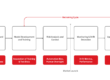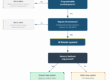

Hospital information systems (HIS) are a type of clinical information system. They are a central component of a hospital’s IT infrastructure. They help digitally manage and process administrative and medical patient data within a hospital. An HIS functions as an electronic patient record and manages processes ranging from admission, through diagnosis and treatment, to discharge and billing.
Taking into account the ECJ ruling of 7 December 2017 (C-329/16), this article examines the question of whether a HIS that contains medical device modules counts as a system or as a treatment unit.
- Only medical modules require a CE marking. The ECJ has clarified that if software contains both medical and non-medical modules, only the medical modules need to be ‘certified’ – provided that the boundaries and interfaces are clearly defined.
- A HIS is generally not a “system” or a “treatment unit” within the meaning of the MDR. This is because the MDR definition of a system (Art. 2(11)) requires that the combination itself serves a specific medical purpose. The fact that an HIS contains individual medical device modules is not sufficient – what matters is whether the purpose of the combination is a medical one. This is typically not the case with a HIS: the combination serves centralised information management, not diagnosis or therapy.
- The distinction between holistic and heterogeneous is crucial. In the case of a holistic HIS (one manufacturer, delivered as a complete system), the act of ‘assembly’ is already absent. In the case of a heterogeneous HIS (modules from different manufacturers), it must also be checked whether the combination serves a medical purpose.
- Caution regarding the intended purpose of the combination! If a heterogeneous HIS is combined in such a way that a new medical intended use arises, this may trigger a new conformity assessment procedure.
1. Starting Point
Software systems in hospitals often combine modules with different functions: pure data management on the one hand, and diagnostic or therapeutic functions on the other. The latter are to be classified as medical devices. Together, these modules often form a hospital information system (HIS).
For a long time, it was unclear whether a single medical module rendered the entire software system a medical device. The ECJ ruling of 7 December 2017 (C-329/16) provides clarity: only those modules that meet the definition of a medical device require a CE marking.
But what does this mean for the classification of a HIS as a system or treatment unit under the MDR?
2. What are Systems and Treatment Units?
The MDR provides the first legal definition of both terms:
| Term | Definition (Art. 2 MDR) | Core |
|---|---|---|
| Treatment unit (No. 10) | A combination of co-packaged and marketed devices intended for a specific medical purpose | Co-packaging required |
| System (No. 11) | A combination of devices (whether co-packaged or not) that are connected or combined to fulfil a specific medical purpose | Assembly/combination required |
Two conditions are therefore crucial:
- The act of assembly: The products must actually be combined (not merely a collection of items).
- The specific medical purpose of the combination: It is not a single module, but the combination as such that must serve a diagnostic or therapeutic purpose.
Read more about medical device systems and treatment units here.
3. Is a HIS a System or a Treatment Unit?
A hospital information system consists of many modules, such as lab results, medication, billing, patient data, care records or lab results.
Holistic HIS (one manufacturer, one package)
If a manufacturer supplies its HIS as a ready-made complete package, without anyone having to assemble the modules, it is neither a system nor a treatment unit. The act of assembly is already missing. Instead, the HIS is provided as a ready-made unit and put into operation.
Heterogeneous HIS (modules from different manufacturers)
If modules from different manufacturers are combined within an HIS, assembly has taken place. This raises the crucial question: Does the combination serve a specific medical purpose?
As a rule: No. A HIS primarily serves to record, process, store and provide information. The medical modules (e.g. a CDSS) fulfil their medical purpose each in their own right – not only through combination with billing, planning or archiving modules.
4. Interpretation of the ECJ ruling
In its judgment, the ECJ did not address systems or treatment units – presumably because the software in question was designed as a holistic system by a single manufacturer. The key message remains:
- Only the medical modules are to be certified.
- The manufacturer must clearly specify the boundaries and interfaces of the various modules. A new conformity assessment procedure is only required if modules are combined contrary to their original intended purpose to form a new system with a medical purpose.
5. Practical tips
- Carefully formulate the intended purpose of the combination: Ensure that it is clearly evident that the HIS, as an overall system, is not intended for diagnostic or therapeutic purposes – but for centralised information management.
- Define clear module boundaries: Identify clear boundaries and interfaces between medical and non-medical modules. This is the key requirement of the ECJ.
- Critically assess heterogeneous configurations: As soon as modules from different manufacturers are combined, check whether the combination gives rise to a new medical purpose. If so, a conformity assessment procedure is required.