
Manufacturers must demonstrate compliance with the MDR requirements for usability for all medical devices without exception.
Transition periods apply to some products. However, manufacturers are well advised to familiarize themselves right away with the differences between the MDD and MDR requirements for usability. This is the only way to smoothly manage the transition to the MDR and to avoid regulatory headaches and unnecessary effort, such as conducting unnecessary usability tests.
A free checklist helps you quickly gain clarity—even for “legacy products”—and identify necessary measures.
1. Review: The MDD’s Requirements for Usability
Even the original version of the Medical Devices Directive (MDD, 93/42/EEC) had already set forth initial requirements regarding usability. For example, “measuring scales, controls, and display devices […] must comply with ergonomic principles”.
Amending Directive 2007/47/EC supplemented the MDD with the explicit, essential requirement that risks arising from a lack of usability must be minimized. It already distinguished between risks arising from
- the “ergonomic characteristics of the product”,
- the “environmental conditions in which the product is to be used”, and
- the “technical knowledge, […] experience […] and, where applicable, […] medical and physical requirements of the intended users”.
In conjunction with this change, the EU harmonized the EN IEC 62366:2006 standard, which henceforth represented the state of the art.
2. MDR Requirements for Usability in Detail
A search in the EU Medical Device Regulation (MDR) for the terms “usability” or “Gebrauchstauglichkeit” yields surprisingly few results. Nevertheless, the EU regulation contains numerous requirements regarding usability.
a) Article 5 and Annex I, Paragraph 1: The Product Must be Fit for its Intended Purpose
Article 5 and the first paragraph of Annex I (Essential Safety and Performance Requirements) of the MDR set forth very similar requirements:
A product must, taking into account its intended use, comply with the essential safety and performance requirements applicable to that product as set forth in Annex I.
The products achieve the performance intended by their manufacturer and are designed and manufactured so that they are suitable for their intended purpose under normal conditions of use.
Both refer to the intended use. In this intended use, you should specify not only the intended medical purpose, but also the intended users and the intended environment of use. IEC 62366-1 refers to this as the “Use Specification”.
Read more on what intended use should entail here.
Consequently, manufacturers who have not precisely specified this intended use—and thus the intended users and the intended environment of use—can hardly demonstrate that they meet the MDR’s requirements for fitness for use.
However, you are required to provide precisely this demonstration under the first paragraph of Annex I.
b) Annex I, Paragraph 3: Analysis of Foreseeable Misuse
The third paragraph of Annex I on the essential safety and performance requirements contains even more specific requirements regarding usability:
It requires manufacturers to implement a risk management system. In doing so, they must “assess and evaluate the risks associated with the intended use and those arising from reasonably foreseeable misuse”.
Such a risk analysis must reflect the state of the art. Mere speculation would therefore not suffice. Rather, one would expect:
- Careful research and evaluation of foreseeable misuses of comparable products, for example in regulatory databases and the manufacturer’s own post-market data
- A list of all use scenarios followed by a task analysis
- Observation of users with approved products or as part of formative and summative evaluations
An auditor or regulatory authority expects to find the results of these analyses in the risk management file.
c) Annex I, Paragraph 5: Measures to Eliminate or Reduce Use Errors
The authors of the MDR adopted paragraph 5 of Annex I almost verbatim from the MDD:
When eliminating or reducing risks resulting from misuse, manufacturers must
a) minimize, as far as possible, the risks arising from the ergonomic characteristics of the device and the environment in which it is intended to be used (product design focused on patient safety), and
b) take into account the technical knowledge, experience, education, and training, as well as, where applicable, the usage environment and the health and physical condition of the intended users (product design oriented toward laypeople, professionals, persons with disabilities, or other users).
While Paragraph 3 required the analysis of usability risks, Paragraph 5 requires their elimination or at least reduction.
Thus, the MDR requires manufacturers to define measures for all identified risks related to usability. According to Paragraph 4, manufacturers must first aim for inherent safety, then consider protective measures, and only then focus on safety information.
Examples of these measures include:
- Inherent safety: A switch that does not exist cannot be operated incorrectly.
- Protective measure: A switch is protected from accidental pressing by a cover.
- Safety information: A warning (e.g., in the instructions for use) about the consequences of accidentally pressing the wrong switch.
d) Annex I, paragraph 14.1: Specific Risks Arising From Interactions With Other Products
Paragraph 14 of Annex I requires the control of risks that may arise from the product’s interaction with its environment. Some of these risks are also related to usability:
If a product is intended for use in combination with other products or equipment, the combination—including the connections—must be safe and must not impair the intended performance of the products. Any restrictions on use related to such combinations must be indicated on the labeling and/or in the instructions for use. Connections to be operated by the user—such as those for the transfer of liquids or gases, or electrical or mechanical connections—must be designed and manufactured in such a way that all potential risks, such as faulty connections, are minimized.
This MDR requirement regarding fitness for use should already be met once the manufacturer has taken all use scenarios into account, including the combination or connection of the product with other products. As a measure
e) Annex I, Paragraph 14.2: Specific Risks Due to Inadequate Ergonomic Features
Paragraph 14.2 addresses another type of risk: Unlike paragraph 14.1, the risks to be controlled here are not those resulting from misuse, but rather those arising from the design of the product. The MDR refers to ergonomic characteristics:
Devices shall be designed and manufactured in such a way as to eliminate or reduce as far as possible the following risks:
a) risks of injury related to the physical characteristics, including the volume-to-pressure ratio, the dimensions, and, where applicable, the ergonomic features of the device;
An example would be a dialysis machine on casters. Due to its weight, a rolling dialysis machine would be difficult to stop and could result in crush injuries to the feet or hands. Manufacturers must minimize risks of this kind.
f) Annex I, Paragraph 14.6: Ergonomics of Displays
Paragraph 14.6 of Annex I of the MDR also sets out requirements regarding usability.
Measuring, control, or display devices shall be designed and manufactured in such a way that they comply with ergonomic principles, taking into account their intended purpose, the intended users, and the environmental conditions under which the products are to be used.
The MDR does not specify what ergonomic principles are. Many manufacturers therefore develop their own style guides and, in doing so, run the risk of constantly reinventing the wheel.
The Johner Institute recommends following the guidelines set forth in the ISO 9241 family of standards. These standards describe how user interfaces should be designed in practice: from menus to websites to command lines.
Please note: The design of user interfaces must take into account both the usage environment (e.g., brightness, distance from the product) and the users themselves (including any physical limitations).
g) Annex I, Paragraph 21.3: Clarity of Displays
In addition to ergonomics, the MDR also requires, in paragraph 21.3 of Annex I, that displays be understandable:
The function of control and display devices must be clearly indicated on the products. If instructions for using the product are affixed to the product itself or if operating or control parameters are displayed visually, this information must be understandable to the user and, where applicable, the patient.
To meet this MDR requirement regarding usability, manufacturers must precisely characterize users and patients. Ultimately, whether a display is understandable depends on the specific individual’s prior knowledge and experience.
Whether these displays are truly understandable as part of the user interface can only be demonstrated through empirical data. Manufacturers can collect this data through, for example, surveys, participant observation, and the analysis of post-market data.
h) Annex I, Paragraph 22: Laypeople
New in this form are the specific and comprehensive requirements of the MDR regarding safe use by laypeople in Paragraph 22 of Annex I. It even defines the term:
“Layperson” means a person who does not have formal training in the relevant field of healthcare or medical specialty.
Since the requirements are very extensive, here is a summary:
- Manufacturers must take into account the “expected variations in the procedures and environment of lay users”.
- In any case, risks must be minimized. Lay users must be able to use the product “safely and without error during all phases of use”.
- To this end, “appropriate training and/or instruction” may be necessary.
- Instructions and information must be “easy to understand and apply” for this target group.
- Essentially as a risk-mitigation measure, the MDR stipulates that laypeople themselves must be able to verify whether the product is functioning as intended and whether the product issues a warning if a valid result has not been obtained.
These requirements have a direct impact on product design, as well as on the design of training programs and the necessary evidence, e.g., in the form of usability tests.
i) Annex I, Article 23: User-Friendly Instructions for Use
The MDR does not limit its requirements to the product itself. According to Article 23 of Annex I, the instructions for use and other accompanying materials must also be fit for purpose.
The medium, format, content, legibility, and location of the labeling and the instructions for use must be appropriate for the specific product, its intended use, and the technical knowledge, experience, education, or training of the intended users. In particular, the instructions for use must be written in such a way that they can be easily understood by the intended user and, where appropriate, supplemented with drawings and diagrams.
MDR, Annex I, Article 23.1(a)
Manufacturers do not have complete freedom in implementing these requirements. For example, the MDR requires them to use “internationally recognized symbols” and to explain them where necessary.
j) Annex II: Technical Documentation
Even Annex II contains a direct reference to usability, as it specifies the content of the technical documentation. This content is found in the usability dossier.
k) Article 83(3) and Annex III, Section 1.1: Post-Market Surveillance
The MDR mentions the term “usability” only once, in the context of the UDI (not relevant here) and post-market surveillance.
The MDR requires manufacturers to ensure that a system “uses the data collected for post-market surveillance, in particular for the following purposes”:
f) identifying opportunities to improve the usability, performance, and safety of the device;
MDR, Article 83, Paragraph 3
In Annex III, the MDR then specifies what information must be collected and evaluated:
- information on serious incidents, including information from safety reports, and field safety corrective actions,
- records of non-serious incidents and data on any adverse events,
- information on reported trends,
- relevant scientific or technical literature, databases, and/or registries,
- information submitted by users, distributors, and importers, including feedback and complaints, and
- publicly available information on similar medical devices.
For manufacturers, this means they must implement the following steps:
- Verify that all required information is collected and evaluated. The relevant procedure manual must also describe this.
- Ensure that this information is also evaluated for suggestions to improve usability. Ideally, manufacturers can demonstrate this using examples.
- Ensure that usability experts and risk managers are involved in this process.
3. What Manufacturers Should Do Specifically
a) Manufacturers of New Products
Manufacturers developing new products must follow IEC 62366-1. This standard describes the state of the art.
b) Manufacturers of “Legacy Products”
Manufacturers of products that have already been developed and either require re-approval or benefit from the transition periods should reassess the products’ conformity.
This does not necessarily require a complex conformity assessment procedure. The Johner Institute checklist (see below) alone helps to quickly gain initial clarity.
c) All Manufacturers
It is essential to systematically collect post-market data and evaluate it for insights into improving usability. This requires suitable processes, tools, and experts.
d) Summary
In summary, the Johner Institute therefore recommends the following steps:
- For products being placed on the market for the first time under the MDR, strictly comply with IEC 62366-1.
- For all other products, review the checklist below, identify gaps, and implement appropriate measures to close these gaps. Seek external support if resources are limited.
- Establish an effective post-market surveillance system for all products.
Even manufacturers of products that benefit from the transition periods should not assume that compliance with the MDD is a given—and thus sufficiently demonstrated—simply because their products comply with the (old) IEC 62366. The state of the art and risk management effectively compel manufacturers to adhere to the “new” IEC 62366-1 and, by extension, to implicitly meet the MDR requirements.
4. Checklist and Additional Support from the Johner Institute
a) Checklist for Manufacturers
The Johner Institute has developed a checklist that allows you to quickly assess whether your products and processes comply with the state of the art and the requirements of the MDR.
[The file is currently being translated and will be accessible shortly]
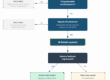
Fig. 1: Screenshot of the checklist on the MDR’s usability requirements
You can download the free checklist here [link follows].
b) Identify Gaps, Define Measures
The usability experts at the Johner Institute help you quickly identify discrepancies and define the right measures to close these gaps.
Tasks in which the Johner Institute can assist you include:
- Review of existing usability dossiers for compliance with IEC 62366-1
- Verification of the risk management dossier for completeness and compliance with the MDR and ISO 14971
- Analysis of process descriptions, e.g., for post-market surveillance
- Reviewing instructions for use for clarity as well as compliance with laws and standards
c) Implement measures quickly and effortlessly
The experts at the Johner Institute focus on avoiding any form of unnecessary work and adopting a risk-based approach. Together with you, they pursue the goal of ensuring patient safety and guaranteeing your company’s success in audits.
Tasks in which the Johner Institute can assist you include:
- Revising and refining the Use Specification (to avoid unnecessary usability tests)
- Describing missing Use Scenarios and evaluating them for safety relevance
- Proposing improvements to the user interface
- Supplement (or create) instructions for use to achieve MDR compliance
- Conduct formative and summative evaluations
- Define your post-market process and assist with data analysis
The key to successfully creating a legally compliant usability dossier
Learn how to create a legally compliant usability dossier with all necessary documents. As an Auditgarant member, you have access to our comprehensive collection of templates that will save you time and effort. Our practical learning materials enable you to create your usability dossier quickly and easily without compromising on quality.
5. Conclusion and Summary
A first glance at the MDR can be misleading: Just because the MDR barely mentions the term “usability,” one should not conclude that usability is not a concern under the EU regulation. The opposite is true. As outlined above, it imposes extensive requirements on usability.
Unfortunately, the MDR uses terms such as “ergonomics” somewhat awkwardly (similar to the DiGAV) and does not rely on established definitions.
Even manufacturers of products that are still being placed on the market with MDD certificates cannot afford to rest on their laurels. The MDD also requires compliance with the state of the art. The MDR and IEC 62366-1 define this “state of the art” more explicitly.
The Johner Institute recommends
- using the free checklist to get a quick overview and
- to verify the effectiveness and conformity of the post-market surveillance system. After all, there are no(!) transition periods for this.
Change History
- 2026-10-27:
- In Chapter 2.j), the content was removed and replaced with a link to the article on the fitness-for-use dossier to avoid duplication and inconsistencies
- In Chapter 4.d), a reference to the fitness-for-use dossier was also added
- 2020-02-18: First version of the article